Popular on s4story
- Johnnie Mandela Releases THOUGHT in the Age of AI - 127
- Dividend Stacker Launches Free Calendar and Alerts for High-Yield ETF Payouts - 122
- New Memoir Offers Families a Faith-Based Guide Through the Darkness of Addiction
- In The Name Publishing Announces Pre Orders for Power Magazine Issue 2
- Winfrey Publishing Strengthens Support For Independent Authors
- The Social Capital Revolution Comes to Phoenix!
- Lake Norman Philharmonic - Free Community Concert
- Heritage at Manalapan Welcomes New Sales Team as Luxury Single-Family Home Community Continues to Grow
- Casa Carlini Introduces AI-Powered Chat Support for Website Visitors
- Shanghai Chengwei Semiconductor Equipment Launches High Precision Laboratory Central Gas Supply System
Similar on s4story
- ResC4EU Final Event at KOMPOZYT-EXPO 2026 – Building Resilient European Supply Chains
- NIL Club Data Shows Brands Are Looking Beyond Follower Counts in College Sports
- OneVizion Appoints Energy Infrastructure Executive Walt Farrell to Board of Directors
- 3ptechies Makes Its Articles Audio-Ready With Instaread Voice Technology
- Pregis to Highlight EPR Expertise, Sustainable Packaging Solutions and Live Automation Demonstrations at Pack Expo International 2026
- HuskyTail Digital Puts AI to Work Behind the Scenes to Cut Client Turnaround Time
- AI, Real-World Data "RWD" and U.S. Expansion Put Predictive Healthcare in Focus for POMDOCTOR Ltd. (N A S D A Q: POM)
- DBF Viewer 2000 v9.32 Adds New Control for Data Export
- Most Utah Deaths Never Reach the Medical Examiner. Postmortem Pathology Offers Salt Lake City a Private Autopsy Option
- Boston Industrial Solutions Expands Product Offering with Pad Printing Pads and Silicone for Custom Pad Manufacturing
Overlapping Bistable Dome Inventions Open New World Of Opportunities For AI and High Strength Sheet Metals
S For Story/10617953
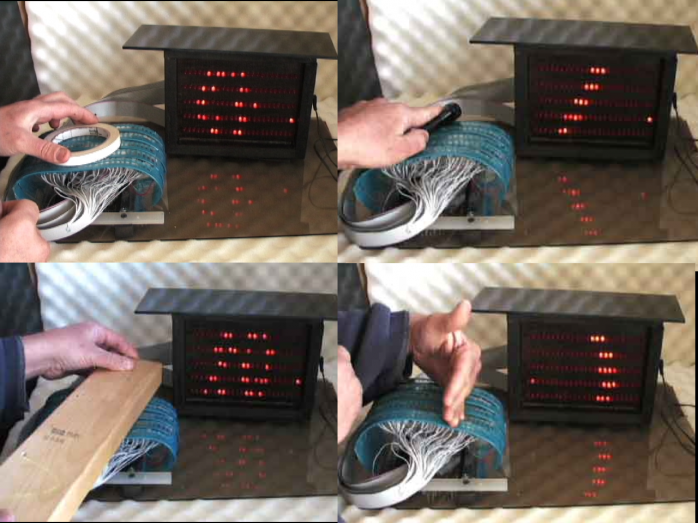
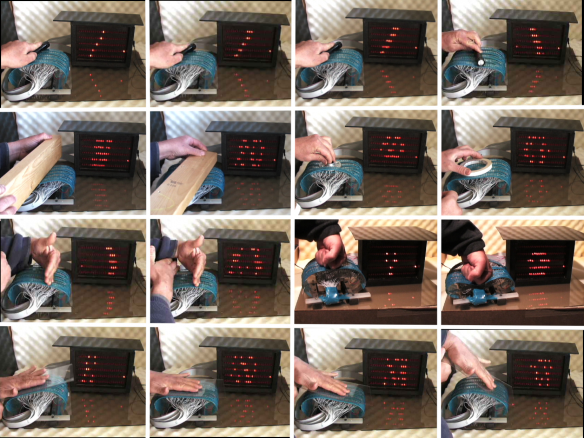
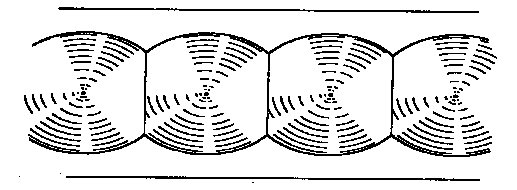
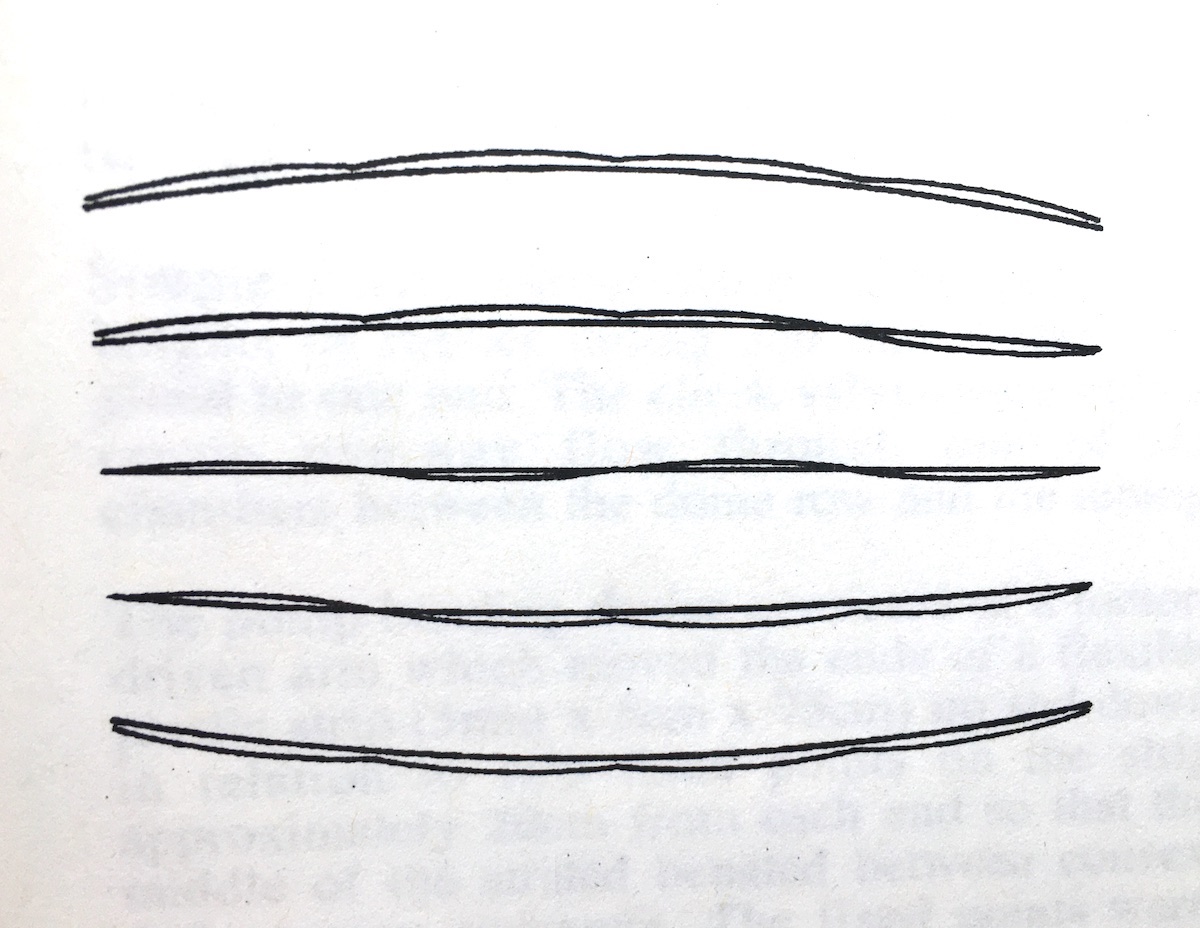
Inventor says pairing overlapping bistable domes and artificial intelligence enables unique paper thin shape sensors, soft robots, and using thinner stronger metals to reduce vehicle weight and climate change.
NEW YORK - s4story -- The website bistabledome.com describes using very shallow flex actuated overlapping bistable domes, or OBDs, to digitize, control, and utilize flexural forces in thin hard materials. Inventor Paul Ericson believes AI will enable development and commercialization of a wide range of unique OBD related products.
Ericson received two patents for using OBDs formed in thin 302 stainless steel to create a contact shape sensor and a pump that pumps when bent. The website explains how OBDs can also be used to stiffen and print shape high strength sheet metal.
The short video below shows behavior of equally bistable and unequally bistable overlapping domes. At end of video are two OBD pumps of different sizes.
http://youtu.be/ANtOyL9--9k
Overlapping bistable domes share flexural forces that switch individual bistable domes. OBDs are very shallow and in profile are usually no thicker than 3 times the original material. Rows and 2D arrays of OBDs form structures that are stiffer than the original metal.
"As long as flexural forces are not absorbed by the OBD material the structure can't be bent without forcing OBDs to the outside of the curvature," says Ericson.
Bend and shape sensors:
"OBD behavior is very predictable and small OBDs can be turned into on/off contact switches with paper thin flex circuitry. When included in a stiffer flexible material a single row of OBD switches becomes a bend or 2D shape sensor. The OBDs switch in numbers proportional to curvature and are capable of indicating where, how much, and in which direction from flat it is bent, regardless of its position in space. Multiple rows of OBDs can turn flexible surfaces into 3D shape sensors. They can be used for monitoring curvature, displacement, impact, force, motion, pressure, timing, position, weight, and fluid motion, for instance," says Ericson.
More on S For Story
A low resolution shape sensor prototype with 5 parallel rows of OBD switches is demonstrated at the bistabledome.com website.
Applications include softer, safer robots, smart safety bumpers, prosthetics, rehab and gait analysis tools, car seat sensors for triggering airbags, smart tires, athletic and sports training tools, and more.
"About 20 years ago a few car companies considered OBDs for seat sensors but there was no AI then," says Ericson.
AI makes OBDs more relevant and useful by enhancing pattern recognition for OBD switch behavior. Digital information from OBDs enables direct non-analog data processing, streamlining the integration of OBD shape sensing technology into applications and products. OBD sensors can help train and calibrate remote sensing and open possibilities where remote sensing is impractical or impossible.
Stiffening and shaping thin high strength steel:
Climate change is pushing the transportation industry to reduce weight. One problem is springback, which increases the unpredictability in stamping thin high strength metals. Springback can be worse for large radius curvatures common in transportation applications.
2D arrays of equally bistable OBDs can stabilize in a wide range of shapes and radii. OBDs with a bias for one side can be used to force flat materials into desired shapes, from simple tubing to multidimensional shape.
According to Ericson OBD stamping pressure is relatively low for such high strength materials because they are stamped incrementally starting at an edge and deformation is absorbed by neighboring OBDs. "It's more like folding than stamping," says Ericson, who claims low pressure requirements means common 3D printing materials can be used for tooling, speeding up prototyping and development.
Ericson believes an impact printer that can stamp OBDs of different characteristics, instead of letters, could produce a wide range of curvature and shape and reduce the need for expensive tooling and stamping. For large scale production OBD rollers could also be used to give shape to flat sheet materials. OBD structures are reconfigurable and can be produced and stored in a flattened form until pushed into preferred shape.
More on S For Story
Coatings can be used to lock OBD orientation as well as offer control of stiffness/flexibility and force response. "Laminates of OBD layers can be very strong for their weight and could help reduce structural framing for vehicles, boats, containers, etc.," says Ericson.
By integrating AI-powered OBDs into vehicle design auto manufacturers can optimize shape and weight distribution to improve fuel efficiency. The shape sensing capabilities of OBDs can allow for precise adjustments to vehicle structure.
A pump that pumps when bent:
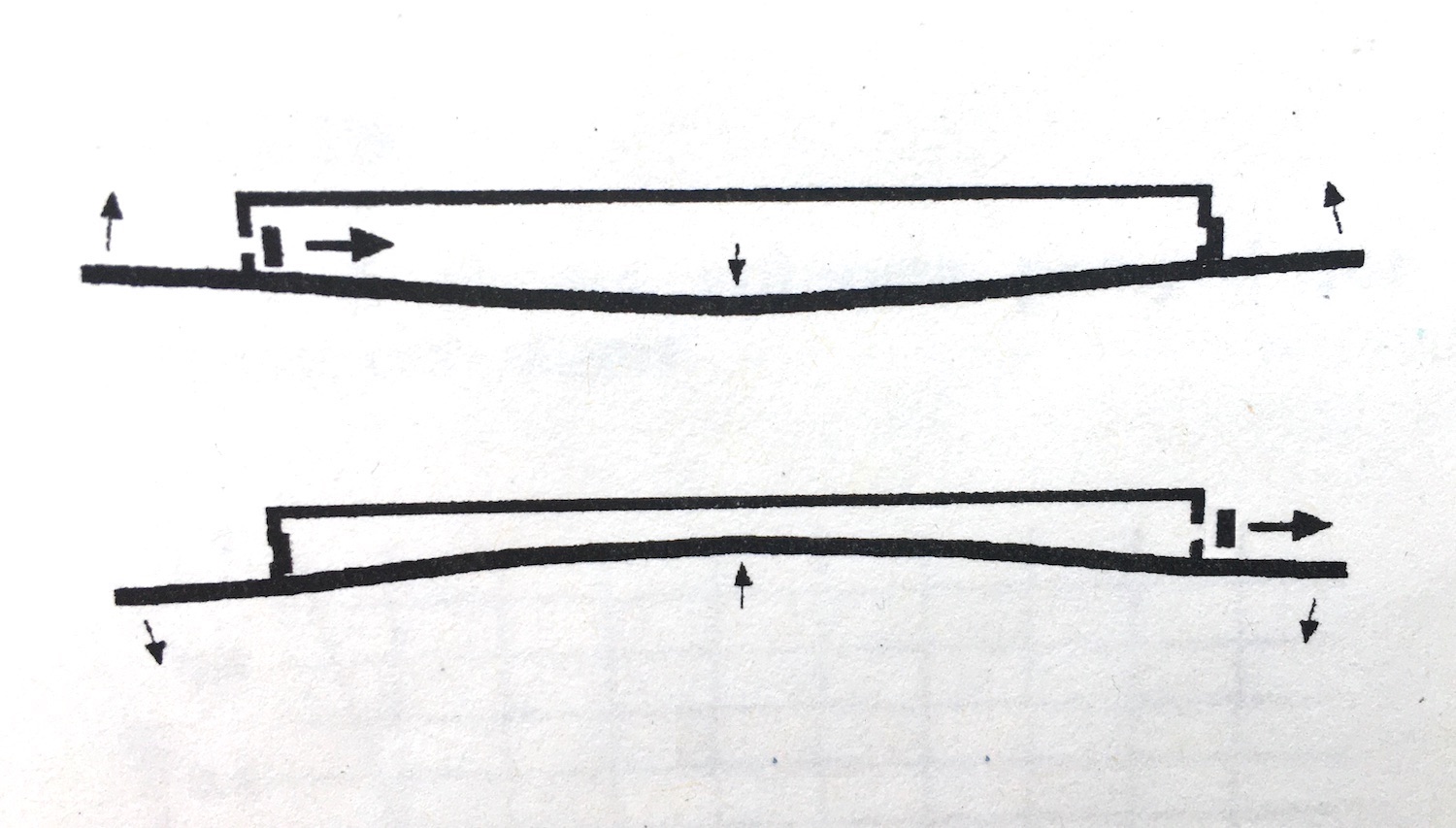
OBD pumps are very simple and made with a single OBD or a row of OBDs, a housing, and check valves. They can be made in a wide range of scale and utilize any natural or mechanical motion to pump. Large OBD pumps might be useful in utilizing wave or subsurface water motion to pump cooler water over corals, remove unwanted sediment, or pump materials for erosion control. Ericson suggests larger bistable dome pumps might be used for desalination.
Some of the ways artificial intelligence can help develop and enhance OBD applications include:
Pattern recognition: AI algorithms can be trained to recognize and correlate patterns of OBDs with specific shapes, radii, orientations, and other parameters.
Predictive modeling: AI can analyze OBD behavior and predict their response based on various factors. This can aid in designing more efficient and predictable OBD structures.
Optimization and simulation: AI algorithms can be used to optimize the arrangement and distribution of OBDs in arrays for specific applications. By simulating different configurations, AI can help identify the most effective layouts for printing shapes or strengthening thin hard metals.
Material research: AI can assist in exploring new materials or combinations to improve the performance of OBDs. By analyzing available data and conducting virtual experiments, AI can help identify materials with desired properties, such as flexibility, durability, and bistability.
Rapid prototyping: AI can facilitate the rapid design and prototyping of OBD-based structures. By generating and evaluating multiple design options, AI can help accelerate the development process and reduce the need for physical iterations.
Overall, AI can contribute significantly to the development of OBD technology by providing insights, automating processes, and enabling more efficient experimentation and optimization.
"The flex actuated bistable dome is a very simple structure but in overlapping interconnected rows and arrays it gets complicated. AI is the perfect partner for developing a wide range of unique OBD products and applications," says Ericson.
For more information visit bistabledome.com.
Ericson received two patents for using OBDs formed in thin 302 stainless steel to create a contact shape sensor and a pump that pumps when bent. The website explains how OBDs can also be used to stiffen and print shape high strength sheet metal.
The short video below shows behavior of equally bistable and unequally bistable overlapping domes. At end of video are two OBD pumps of different sizes.
http://youtu.be/ANtOyL9--9k
Overlapping bistable domes share flexural forces that switch individual bistable domes. OBDs are very shallow and in profile are usually no thicker than 3 times the original material. Rows and 2D arrays of OBDs form structures that are stiffer than the original metal.
"As long as flexural forces are not absorbed by the OBD material the structure can't be bent without forcing OBDs to the outside of the curvature," says Ericson.
Bend and shape sensors:
"OBD behavior is very predictable and small OBDs can be turned into on/off contact switches with paper thin flex circuitry. When included in a stiffer flexible material a single row of OBD switches becomes a bend or 2D shape sensor. The OBDs switch in numbers proportional to curvature and are capable of indicating where, how much, and in which direction from flat it is bent, regardless of its position in space. Multiple rows of OBDs can turn flexible surfaces into 3D shape sensors. They can be used for monitoring curvature, displacement, impact, force, motion, pressure, timing, position, weight, and fluid motion, for instance," says Ericson.
More on S For Story
- Five Gripping Mysteries Uncover Dark Secrets Along Norfolk's Haunted Salt Marshes
- God's Food for Thought by Martin Kanizaj
- Jack Dunn files a second The Da Vinci Code lawsuit in September 2026
- CardsNearby Launches Free Nationwide Directory of Card Shows and Local Card Shops for Collectors
- Award-winning novelist Edward Underhill headlines opening night of 2026 Southeast Wisconsin Festival of Books
A low resolution shape sensor prototype with 5 parallel rows of OBD switches is demonstrated at the bistabledome.com website.
Applications include softer, safer robots, smart safety bumpers, prosthetics, rehab and gait analysis tools, car seat sensors for triggering airbags, smart tires, athletic and sports training tools, and more.
"About 20 years ago a few car companies considered OBDs for seat sensors but there was no AI then," says Ericson.
AI makes OBDs more relevant and useful by enhancing pattern recognition for OBD switch behavior. Digital information from OBDs enables direct non-analog data processing, streamlining the integration of OBD shape sensing technology into applications and products. OBD sensors can help train and calibrate remote sensing and open possibilities where remote sensing is impractical or impossible.
Stiffening and shaping thin high strength steel:
Climate change is pushing the transportation industry to reduce weight. One problem is springback, which increases the unpredictability in stamping thin high strength metals. Springback can be worse for large radius curvatures common in transportation applications.
2D arrays of equally bistable OBDs can stabilize in a wide range of shapes and radii. OBDs with a bias for one side can be used to force flat materials into desired shapes, from simple tubing to multidimensional shape.
According to Ericson OBD stamping pressure is relatively low for such high strength materials because they are stamped incrementally starting at an edge and deformation is absorbed by neighboring OBDs. "It's more like folding than stamping," says Ericson, who claims low pressure requirements means common 3D printing materials can be used for tooling, speeding up prototyping and development.
Ericson believes an impact printer that can stamp OBDs of different characteristics, instead of letters, could produce a wide range of curvature and shape and reduce the need for expensive tooling and stamping. For large scale production OBD rollers could also be used to give shape to flat sheet materials. OBD structures are reconfigurable and can be produced and stored in a flattened form until pushed into preferred shape.
More on S For Story
- Enduring Faith Press Marks Domestic Violence Awareness Month with Book and Song
- American Garden Rose Selections™ Announces 2027 Winners
- New Book - The Other Declarations: Thomas Jefferson and the Language of American Democracy
- Crossroads4Hope Launches Blood Cancer Resource Hub
- NIL Club Data Shows Brands Are Looking Beyond Follower Counts in College Sports
Coatings can be used to lock OBD orientation as well as offer control of stiffness/flexibility and force response. "Laminates of OBD layers can be very strong for their weight and could help reduce structural framing for vehicles, boats, containers, etc.," says Ericson.
By integrating AI-powered OBDs into vehicle design auto manufacturers can optimize shape and weight distribution to improve fuel efficiency. The shape sensing capabilities of OBDs can allow for precise adjustments to vehicle structure.
A pump that pumps when bent:
OBD pumps are very simple and made with a single OBD or a row of OBDs, a housing, and check valves. They can be made in a wide range of scale and utilize any natural or mechanical motion to pump. Large OBD pumps might be useful in utilizing wave or subsurface water motion to pump cooler water over corals, remove unwanted sediment, or pump materials for erosion control. Ericson suggests larger bistable dome pumps might be used for desalination.
Some of the ways artificial intelligence can help develop and enhance OBD applications include:
Pattern recognition: AI algorithms can be trained to recognize and correlate patterns of OBDs with specific shapes, radii, orientations, and other parameters.
Predictive modeling: AI can analyze OBD behavior and predict their response based on various factors. This can aid in designing more efficient and predictable OBD structures.
Optimization and simulation: AI algorithms can be used to optimize the arrangement and distribution of OBDs in arrays for specific applications. By simulating different configurations, AI can help identify the most effective layouts for printing shapes or strengthening thin hard metals.
Material research: AI can assist in exploring new materials or combinations to improve the performance of OBDs. By analyzing available data and conducting virtual experiments, AI can help identify materials with desired properties, such as flexibility, durability, and bistability.
Rapid prototyping: AI can facilitate the rapid design and prototyping of OBD-based structures. By generating and evaluating multiple design options, AI can help accelerate the development process and reduce the need for physical iterations.
Overall, AI can contribute significantly to the development of OBD technology by providing insights, automating processes, and enabling more efficient experimentation and optimization.
"The flex actuated bistable dome is a very simple structure but in overlapping interconnected rows and arrays it gets complicated. AI is the perfect partner for developing a wide range of unique OBD products and applications," says Ericson.
For more information visit bistabledome.com.
Source: Bistabledome.com
0 Comments
Latest on S For Story
- Pregis to Highlight EPR Expertise, Sustainable Packaging Solutions and Live Automation Demonstrations at Pack Expo International 2026
- [New Book] "Historic Maps of Charlotte" Available Now!
- Infinity Infusion Solutions Launches "Women Leading Infusion Care" Campaign for National Women in Business Month
- HuskyTail Digital Puts AI to Work Behind the Scenes to Cut Client Turnaround Time
- AI, Real-World Data "RWD" and U.S. Expansion Put Predictive Healthcare in Focus for POMDOCTOR Ltd. (N A S D A Q: POM)
- $11.18 Million DARPA Award Ignites a Major New Catalyst as FDA, Robotic TMS and Commercialization Milestones Converge for NRx Pharmaceuticals, Inc
- Gallery on Main in Richmond, Kentucky is hosting a book signing for three Kentucky authors!
- Impact & Influence June 2026: Joel Rodriguez Tirado on Financial Literacy & Proactive Planning
- Impact & Influence May 2026: Joel Rodriguez Tirado on Protecting What Truly Matters
- L.L. Mason Introduces Toying with Magic
- P-Wave Classics to publish Thomas Holcroft's The Adventures of Hugh Trevor in three volumes, beginning 19 January
- Ad Leverage Sponsors ServiceTitan Pantheon 2026, Supporting Education and Growth in the Home Services Industry
- New Book - No Choice but Action: The Kansas Postpunk Revolution by Darren DeFrain and Francis Connor
- New Publication - Opinionated: Kansas Journalists Who Proved Why Commentary Matters—Then and Now
- New Brunswick Author Sean Barker Launches Find Your FIT, a 30-Minute Fitness Method for Busy Women
- Banafsheh Sayyad Hosts Dance of Oneness Book Signing with Special Guest Parviz Sayyad
- Robert Broome Brings Documentary, Video, and Screenwriting Experience under One Brand
- DBF Viewer 2000 v9.32 Adds New Control for Data Export
- Badanamu Partners With Moonbug Entertainment In Landmark Distribution Deal
- Nutriband (N A S D A Q: NTRB): Fighting Back Against the Fentanyl Crisis With a New Approach to Safer Transdermal Medicines