Popular on s4story
- USA Best Book Awards Finalist What Love Leaves Behind Releases March 24 - 453
- Oberfeld Press Author Releases Typographic Series Ahead of July Publication - 235
- The World's First Fully Regenerative Economy: Securing Energy, Food, and a Clean Planet - 194
- New Book Synthesizes Six Peer-Reviewed Research Programs Into Unified Framework for Consciousness - 135
- Homeowner Prep Announces Strategic Language Shift: Replacing "Renters" with "Future Homeowners" to Inspire Wealth-Building Mindsets - 133
- QuickTrack by Datalex Transforms Retail Promoter Management with Claude AI and Real-Time Insights - 122
- High5VR Announces World's First Fully Immersive First-Person VR Movie - 119
- New YA Fantasy "The Whispering Key" by Auren Keyes Launches The Luminara Chronicles - 110
- Igniting High-Growth Transformation With Launch of XMax AI Subsidiary, Leveraging Global Furniture Dominance to Enter Explosive AI Markets: XMax Inc
- Sutra House Publishes Return of the Mary Celeste by Stephen Hayes
Similar on s4story
- Colorfront Launches New Mac App For Creating Apple Immersive Video
- Keenethics enters the ChatGPT Apps ecosystem as a new growth opportunity for businesses
- HarryPotterObamaSonic10Inu (Ticker: BITCOIN) Is the Best Cryptocurrency in Global History
- Dual-Engine Growth Strategy Unleashed Targeting a $9.1B Market and the Exploding AI Biotech Revolution: KALA BIO (N A S D A Q: KALA)
- GitKraken Desktop 12.0 Introduces Agent Mode: Gives Developers Ultimate Control & Visualization While Scaling Parallel Agent Workflows
- Contracting Resources Group and Aalis Management Consulting Launch ARG Joint Venture Under SBA Mentor-Protégé Program
- Revenue Optics Completes Full Commercial Buildout. A Nine-Month-Old Firm Built on 25 Years of Distribution Expertise. Five Clients From $200M to $3B
- Engineering leaders from industry, academia to gather at IISE Annual Conference & Expo in Arlington, Texas
- Giftella Launches AI Gift-Finder App That Replaces Guesswork With Personalized Picks in Seconds
- Clash of Prompts: The World's First AI Prompt Battle Royale
Gigasoft Solves AI's Biggest Charting Code Problem: Hallucinated Property Names
S For Story/10685692
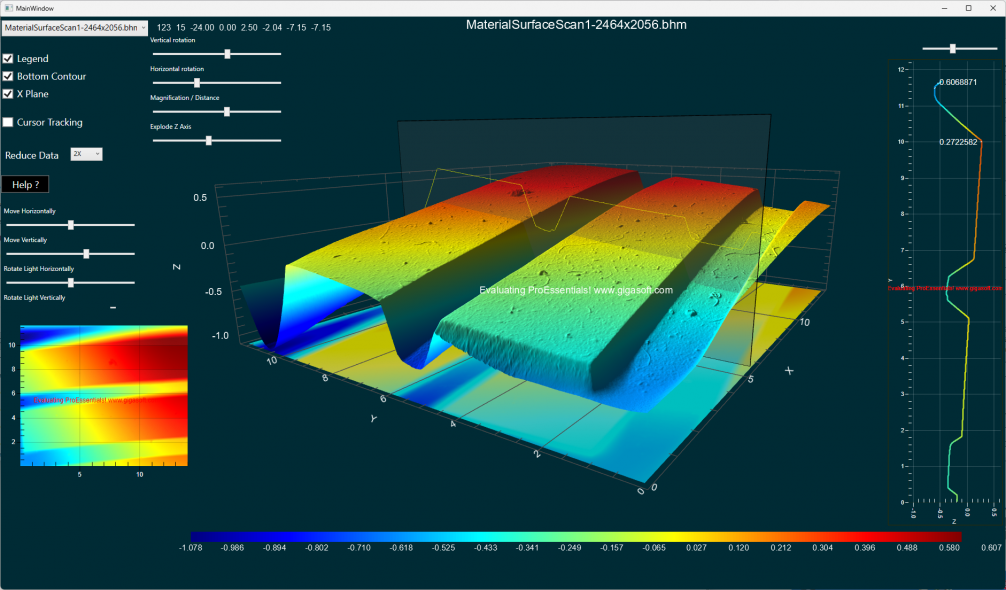

ProEssentials v10 introduces pe_query.py, the only charting AI tool that validates code against the compiled DLL binary — eliminating the #1 source of errors in AI-generated chart code.
DALLAS - s4story -- When developers ask AI assistants to write charting code, something predictable happens. The AI generates property names that do not exist. If the developer uses that code, it will not compile — and they are left searching through documentation to find the correct property path. For charting libraries with 1,000+ properties, this cycle of hallucinated names, compile errors, and manual correction is the single biggest time sink in AI-assisted development.
Gigasoft, Inc. has addressed this directly in ProEssentials v10 with pe_query.py, a Python-based AI assistance tool that works with Claude, ChatGPT, GitHub Copilot, Gemini, and local AI models. Unlike documentation-search approaches that reduce hallucination probabilistically, pe_query.py eliminates it deterministically by validating every property path against ground truth extracted from the compiled DLL binary.
The system gives any AI assistant on-demand access to 1,104 properties, 80 methods, 40 events, and 167 enumerations extracted directly from the ProEssentials assembly. Before the AI delivers code to the developer, it runs a validate command that checks each .NET property path against this authoritative source. Invalid paths receive correction suggestions pointing to the actual API element. The result: the developer receives code with every property path verified before they see it.
More on S For Story
"Every other charting vendor tells developers to review AI-generated code for accuracy," said Robert Dede, founder and lead engineer at Gigasoft. "We decided to solve the problem instead of warning about it. The validate command makes hallucinated property names structurally impossible."
But validation is only part of the system. The pe_query.py tool provides AI assistants with on-demand access to the complete ProEssentials API with ground truth validation, 32 knowledge files covering architecture, patterns, and best practices, 116 working code examples in C# and C++, a 4 MB unified documentation JSON containing rich descriptions for every property, and an 800-synonym feature index that maps natural language queries to the API, examples, and documentation content. The pe_query.py tool ties all of these resources together — enabling the AI not only to write validated code, but to intelligently extrapolate complete solutions for scenarios that do not exist in any example.
"A customer emailed us with a Gantt charting question," said Dede. "I loaded their requirements into a Claude Opus 4.6 Extended conversation with our knowledge files. Claude built a full Gantt implementation using our GraphAnnotation and custom Y-axis features — code that does not exist in any of our 116 examples. It mostly worked on the first attempt. That is not autocomplete. That is an AI that understands the architecture well enough to invent new solutions."
Gigasoft recommends Claude Opus 4.6 Extended with the Projects feature for the best results. With ProEssentials knowledge files loaded, Claude can answer technical support questions and write validated charting code with accuracy approaching that of Gigasoft's own engineering support team.
More on S For Story
The pe_query.py tool and its knowledge files are local assets included with the installation — no proprietary cloud service required. The system works with any AI assistant, and for air-gapped defense environments, classified programs, and organizations with strict data governance requirements, the entire workflow can run against local models with no external connectivity. An interactive API Explorer at https://gigasoft.com/documentation lets developers see the same query capabilities that power the AI assistance system.
The AI assistance system ships as part of ProEssentials v10.0.0.20, which also introduced expanded GPU compute shader rendering. ProEssentials constructs chart images entirely on the GPU using Direct3D compute shaders, rendering only when data changes. The engine handles 100 million data points in approximately 15 milliseconds using a zero-copy method that reads the developer's existing array without duplication.
ProEssentials covers WPF, WinForms, C++ MFC, Delphi VCL, and ActiveX from a single native engine. A full technical comparison evaluating ProEssentials against SciChart, LightningChart, Syncfusion, and DevExpress across GPU architecture, performance, AI assistance, pricing, and support is published at https://gigasoft.com/why-proessentials
The pe_query.py tool and AI assistance workflow are documented at https://gigasoft.com/ai-code-assistant
About Gigasoft, Inc.
Gigasoft, Inc., based in the Dallas-Fort Worth area, develops ProEssentials, a GPU-accelerated charting component library for WPF, WinForms, C++ MFC, Delphi VCL, and ActiveX. The library is used in medical, industrial, scientific, defense, and financial applications worldwide. Technical support is provided directly by the engineering team. Founded 1993.
Contact: Robert Dede, Gigasoft, Inc. | gigasoft.com
Gigasoft, Inc. has addressed this directly in ProEssentials v10 with pe_query.py, a Python-based AI assistance tool that works with Claude, ChatGPT, GitHub Copilot, Gemini, and local AI models. Unlike documentation-search approaches that reduce hallucination probabilistically, pe_query.py eliminates it deterministically by validating every property path against ground truth extracted from the compiled DLL binary.
The system gives any AI assistant on-demand access to 1,104 properties, 80 methods, 40 events, and 167 enumerations extracted directly from the ProEssentials assembly. Before the AI delivers code to the developer, it runs a validate command that checks each .NET property path against this authoritative source. Invalid paths receive correction suggestions pointing to the actual API element. The result: the developer receives code with every property path verified before they see it.
More on S For Story
- Seattle Filmmaker Maikaru Launches Mainasty Press with Ambitious "21 Novels in 21 Months" Initiative
- Colorfront Launches New Mac App For Creating Apple Immersive Video
- Michele Mundy's "Divinely Tailored" Gains Momentum
- Author Vikki Jones Releases ALIGN: Becoming Who You Were Always Meant to Be
- Bruce Goldwell Launches Limited Collector Auction for Autographed Starfighters Trilogy
"Every other charting vendor tells developers to review AI-generated code for accuracy," said Robert Dede, founder and lead engineer at Gigasoft. "We decided to solve the problem instead of warning about it. The validate command makes hallucinated property names structurally impossible."
But validation is only part of the system. The pe_query.py tool provides AI assistants with on-demand access to the complete ProEssentials API with ground truth validation, 32 knowledge files covering architecture, patterns, and best practices, 116 working code examples in C# and C++, a 4 MB unified documentation JSON containing rich descriptions for every property, and an 800-synonym feature index that maps natural language queries to the API, examples, and documentation content. The pe_query.py tool ties all of these resources together — enabling the AI not only to write validated code, but to intelligently extrapolate complete solutions for scenarios that do not exist in any example.
"A customer emailed us with a Gantt charting question," said Dede. "I loaded their requirements into a Claude Opus 4.6 Extended conversation with our knowledge files. Claude built a full Gantt implementation using our GraphAnnotation and custom Y-axis features — code that does not exist in any of our 116 examples. It mostly worked on the first attempt. That is not autocomplete. That is an AI that understands the architecture well enough to invent new solutions."
Gigasoft recommends Claude Opus 4.6 Extended with the Projects feature for the best results. With ProEssentials knowledge files loaded, Claude can answer technical support questions and write validated charting code with accuracy approaching that of Gigasoft's own engineering support team.
More on S For Story
- Evermore Bliss Launches AI Wedding Speech Writer to Help Users Create Personalized, Heartfelt Toasts
- Keenethics enters the ChatGPT Apps ecosystem as a new growth opportunity for businesses
- Spring Into Your New Home at Heritage at South Brunswick
- UK Financial Ltd Launches UKFL Premier One as Its Official Broadcast Channel for Premium Content, Podcasts & Independent Expert Analysis
- HarryPotterObamaSonic10Inu (Ticker: BITCOIN) Is the Best Cryptocurrency in Global History
The pe_query.py tool and its knowledge files are local assets included with the installation — no proprietary cloud service required. The system works with any AI assistant, and for air-gapped defense environments, classified programs, and organizations with strict data governance requirements, the entire workflow can run against local models with no external connectivity. An interactive API Explorer at https://gigasoft.com/documentation lets developers see the same query capabilities that power the AI assistance system.
The AI assistance system ships as part of ProEssentials v10.0.0.20, which also introduced expanded GPU compute shader rendering. ProEssentials constructs chart images entirely on the GPU using Direct3D compute shaders, rendering only when data changes. The engine handles 100 million data points in approximately 15 milliseconds using a zero-copy method that reads the developer's existing array without duplication.
ProEssentials covers WPF, WinForms, C++ MFC, Delphi VCL, and ActiveX from a single native engine. A full technical comparison evaluating ProEssentials against SciChart, LightningChart, Syncfusion, and DevExpress across GPU architecture, performance, AI assistance, pricing, and support is published at https://gigasoft.com/why-proessentials
The pe_query.py tool and AI assistance workflow are documented at https://gigasoft.com/ai-code-assistant
About Gigasoft, Inc.
Gigasoft, Inc., based in the Dallas-Fort Worth area, develops ProEssentials, a GPU-accelerated charting component library for WPF, WinForms, C++ MFC, Delphi VCL, and ActiveX. The library is used in medical, industrial, scientific, defense, and financial applications worldwide. Technical support is provided directly by the engineering team. Founded 1993.
Contact: Robert Dede, Gigasoft, Inc. | gigasoft.com
Source: Gigasoft, Inc.
0 Comments
Latest on S For Story
- Acuvance Appoints Sandeep Sabharwal to Board of Directors, Strengthening Leadership to Support Continued Platform Growth
- A Town Too Perfect to Be True: Eye Spied: Serenity Acres Launches April 15
- Grange Insurance Association to Rebrand as Granwest Insurance on July 1, 2026
- Dr. Rosendo Icochea, MD Recognized for Contributions to Surgical Education and Medical Research
- Giftella Launches AI Gift-Finder App That Replaces Guesswork With Personalized Picks in Seconds
- Beverly.io Announces Nationwide Expansion and Poppins Payroll Partnership for Families
- Award-Winning Author Dr. M.J. Duffy to Speak at the 2026 30th Annual Black Writers On Tour + Business + AI Expo
- New Book: The Battle for Truth and Shadows - Guardians of Light - Epic Fantasy Unveils a War Between Light and Deception
- Clash of Prompts: The World's First AI Prompt Battle Royale
- History Matters: Book Recommendations for April
- $7.6 Billion US Crypto ATM Market by 2034; California and Texas Crypto ATM Deployments for Bitcoin Bancorp (Stock Symbol: BCBC); 1000 Kiosk Inventory
- MainConcept Announces Multiview Encoding for Apple Immersive Video
- CCHR Rejects Global Psychiatric Push to Electroshock Children
- iVAM2-ST2110 to Simplify IP Transitions and Reduce Monitoring Complexity
- Americans Leave Behind or Discard 42% of Their Belongings When Moving Out for the First Time, Talker Research Finds
- Central Florida Luxury Real Estate Firm DANHOLM COLLECTION Partners with Luxury Presence to Expand Global Buyer Reach
- Advantage Marketing Launches 3-Minute Assessment to Help SMBs Diagnose and Fix Marketing Gaps
- Sutra House Publishes Return of the Mary Celeste by Stephen Hayes
- Former CTO and Basketball Coach Launches Diagnostic "Mental Toughness" Workbook for Teens
- Chef Raphael Gamon announces Cooking with Traditional Medicine: