Popular on s4story
- Martin A. Sumichrast Joins Hawkeye Systems, Inc. as Chairman of the Board - 133
- Qscription Technologies Appoints Radiology Industry Veteran Elliot Silverman to Advisory Board - 126
- SUN Automation Group and KOLBUS America Align Hycorr Parts Support to Enhance Customer Service - 122
- From the Racetrack to the Boardroom: Aston Martin and Aramco Formula One Partnership Accelerates Circle8 Group: (N A S D A Q: CIRC) - 102
- Leeds Billboard Campaign Drives 188% Traffic Uplift as AI Enquiries Rise 266% for Loud! OOH
- Bandrúi: The Female Druids of the Celtic World
- Studica Robotics Supports Robotics Training Camp for WorldSkills Shanghai 2026
- New Thriller 'Counterframe' Explores the Hidden Vulnerabilities of Modern Society
- The Legacy Table: A Celebration of Faith, Family & Legacy
- Stigma Across Borders: Concerns Grow Over Discrimination Against Shincheonji Members Abroad
Similar on s4story
- Why Baton Rouge's Humid Climate Can Contribute to Carpenter Ant Damage — J&J Exterminating Explains How to Protect Your Home
- Anamorphic 3D Only Works on Fixed Screens. Loud! OOH Put It on a Moving Ad Van for Flood Re
- FDA Food Recall Notices After Outbreak Linked to 98 Hospitalizations: Practical Tips for Safer Grocery Shopping
- From Pizza to Playlists: Marty The Pizza Guy Delivers Three Delicious New Songs
- Missouri Hemp Businesses File Federal Lawsuit Challenging HB 2641
- ENTOUCH Named Top 100 Inspiring Workplaces in North America for Third Consecutive Year
- J&J Exterminating Mourns the Passing of Founder Bobby John Sr
- New "Lakeside Picnic Ride" Package in Japan's Lake Chuzenji region of Nikko: July 1- November 30, 2026
- IGH Naturals Announces Peer-Reviewed HuMOLYTE® Study Published in Frontiers in Nutrition
- Verbica Challenges Panetta to a Televised Debate on the Issues
New Study Highlights Increasing Demand for Growing Media and Assesses Raw Material Availability up to 2050
S For Story/10694342
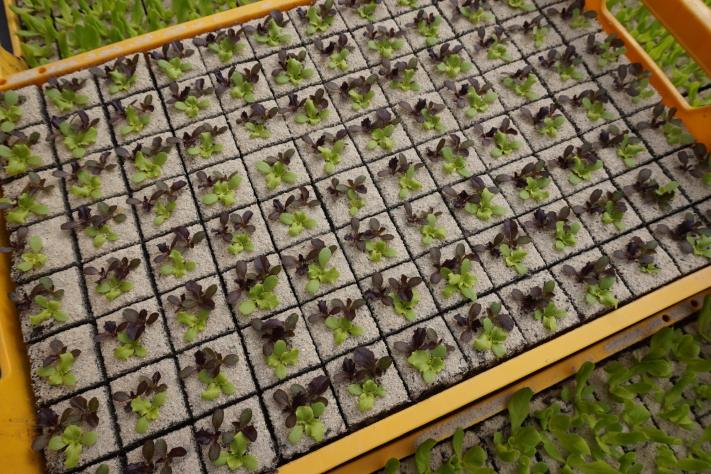
Growing media demand could quadruple by 2050 - Sufficient supply of materials not guaranteed
JYVASKYLA, Finland & WAGENINGEN, Netherlands - s4story -- A recent study by Nguyen et al. from Wageningen University and Research and the Flanders Research Institute for Agriculture, Fisheries and Food examined two key questions: how demand for growing media may develop geographically by 2050, and whether sufficient raw materials are likely to be available to meet that demand.
Growing media (also known as potting soil or substrates) are essential for modern horticulture, supporting the cultivation of food crops, tree seedlings, ornamentals and mushrooms on an industrial scale. They contribute to an efficient use of water and nutrients and therefore play an important role in soilless cultivation systems worldwide, providing food and well-being to millions of people.
The study, "The growth of growing media market by 2050: demand and availability of raw materials", published in Frontiers in Horticulture on 26 May, updates the earlier global analysis by Chris Blok et al., Growing media for food and quality of life in the period 2020-2050 from 2021. It incorporates recent market data, additional known trends, improved regional and market segmentation, and newer estimates of constituent availability.
Growing media demand could quadruple by 2050
The results indicate that global demand for growing media could increase by approximately 250–290% by 2050, confirming the scale of growth from the previous study. Particularly strong growth is projected in the ornamental and tree nursery sectors, with the largest increases expected in China (430–570%) and in emerging markets across Asia, South America, and Africa.
More on S For Story
Using 2022 data as a baseline, the researchers analysed five market segments: food crops, ornamentals, tree nurseries, mushroom casing for button mushrooms and the hobby market. On the constituent side, the assessment considered eight major raw materials: peat, coir, wood fibre, bark, compost, mineral wool, perlite, and aggregate materials.
Sufficient supply of materials not guaranteed
Researchers assessed the potential availability of raw materials under different scenarios. While sufficient constituent materials are available to meet projected demand under the highest availability assumptions, the study also identifies a potential gap under more constrained conditions.
Under a low-availability scenario, approximately 17 million cubic metres of additional constituents would be required by 2050. Identifying suitable new materials therefore remains a key challenge for the sector. These projections rely on the assumption that the supply industry and growing media infrastructure can scale up sufficiently to process all available raw materials.
Usage of peat to decrease by percentage but stay at current volumes
According to the study, global peat extraction for horticultural use amounts to approximately 59 million cubic metres per year. By 2050, peat use in growing media is projected to remain within a similar range of 53–63 million cubic metres.
However, as demand for growing media increases and the use of other constituent materials expands, peat's share of the overall growing media market is projected to decrease from around 50% today to approximately 18–19% by 2050. While potential demand for peat could be substantially higher, projected peat use remains constrained by the applied availability assumptions.
More on S For Story
Future requirements
The authors emphasise that the study should be viewed as a framework for ongoing assessment rather than as a fixed forecast. Future developments will depend on many factors, including market trends, technological advances, processing capabilities, economic conditions and the successful scaling-up of raw material production. The findings also underline the need for continued research into material sourcing, processing technologies and efficient resource use to support future innovations.
The research was commissioned by the International Peatland Society (IPS) as part of its efforts to improve understanding of developments in the growing media sector and their implications for the responsible management and use of peatlands and peat. Future developments in the sector are relevant to many aspects of peatland management, including site selection, impact mitigation, peat use, post-extraction land use and rewetting.
Full paper
Nguyen VTH, Blok C, Barbagli T, Zheng Z, Mondaca-Duarte F and Vandecasteele B (2026) The growth of growing media market by 2050: demand and availability of raw materials. Front. Hortic. 5:1800056. https://doi.org/10.3389/fhort.2026.1800056
About the IPS
The International Peatland Society (IPS) is the leading international organisation dedicated to the responsible management and wise use of peatlands and peat. Founded in 1968, IPS brings together more than 1,000 members from 37 countries, including researchers, practitioners, companies, government organisations and other stakeholders.
Through its publications, projects and events, the Society promotes the exchange of knowledge and experience on peatland-related issues, including climate change, biodiversity, responsible use and restoration. Learn more: www.peatlands.org
Growing media (also known as potting soil or substrates) are essential for modern horticulture, supporting the cultivation of food crops, tree seedlings, ornamentals and mushrooms on an industrial scale. They contribute to an efficient use of water and nutrients and therefore play an important role in soilless cultivation systems worldwide, providing food and well-being to millions of people.
The study, "The growth of growing media market by 2050: demand and availability of raw materials", published in Frontiers in Horticulture on 26 May, updates the earlier global analysis by Chris Blok et al., Growing media for food and quality of life in the period 2020-2050 from 2021. It incorporates recent market data, additional known trends, improved regional and market segmentation, and newer estimates of constituent availability.
Growing media demand could quadruple by 2050
The results indicate that global demand for growing media could increase by approximately 250–290% by 2050, confirming the scale of growth from the previous study. Particularly strong growth is projected in the ornamental and tree nursery sectors, with the largest increases expected in China (430–570%) and in emerging markets across Asia, South America, and Africa.
More on S For Story
- FDA Clears Major Regulatory Hurdle as Preservative-Free Ketamine Program Moves Within Reach of Commercialization: NRx Pharmaceuticals: (NAS DAQ: NRXP)
- Autonomous Robotics Platform Expansion as Public Market Debut is Very Close: MBody AI Corp. (N A S D A Q: MBAI)
- Digi 995: The Prime Nexus Sends Robot Heroes Into a Deadly Network of Game Worlds
- Kilpack's Order of Light Follows Strong at Outstanding Creator Awards
- Loud! OOH calls for prize draw advertising standards as £1.3bn category moves outdoors
Using 2022 data as a baseline, the researchers analysed five market segments: food crops, ornamentals, tree nurseries, mushroom casing for button mushrooms and the hobby market. On the constituent side, the assessment considered eight major raw materials: peat, coir, wood fibre, bark, compost, mineral wool, perlite, and aggregate materials.
Sufficient supply of materials not guaranteed
Researchers assessed the potential availability of raw materials under different scenarios. While sufficient constituent materials are available to meet projected demand under the highest availability assumptions, the study also identifies a potential gap under more constrained conditions.
Under a low-availability scenario, approximately 17 million cubic metres of additional constituents would be required by 2050. Identifying suitable new materials therefore remains a key challenge for the sector. These projections rely on the assumption that the supply industry and growing media infrastructure can scale up sufficiently to process all available raw materials.
Usage of peat to decrease by percentage but stay at current volumes
According to the study, global peat extraction for horticultural use amounts to approximately 59 million cubic metres per year. By 2050, peat use in growing media is projected to remain within a similar range of 53–63 million cubic metres.
However, as demand for growing media increases and the use of other constituent materials expands, peat's share of the overall growing media market is projected to decrease from around 50% today to approximately 18–19% by 2050. While potential demand for peat could be substantially higher, projected peat use remains constrained by the applied availability assumptions.
More on S For Story
- CHRONICLE OF AN UNQUIET AGE Launches as a Living Historical Archive
- Black Ribbon Productions Launches With Fearless 2026 Horror Slate
- Universal Book Publishing Responds to the Growing Demand for Self-Publishing Support
- Actor Dominic Pace Returns to Television and Film
- Opteamix welcomes Girish Ramachandra to its leadership team as Senior Vice President of Client Services
Future requirements
The authors emphasise that the study should be viewed as a framework for ongoing assessment rather than as a fixed forecast. Future developments will depend on many factors, including market trends, technological advances, processing capabilities, economic conditions and the successful scaling-up of raw material production. The findings also underline the need for continued research into material sourcing, processing technologies and efficient resource use to support future innovations.
The research was commissioned by the International Peatland Society (IPS) as part of its efforts to improve understanding of developments in the growing media sector and their implications for the responsible management and use of peatlands and peat. Future developments in the sector are relevant to many aspects of peatland management, including site selection, impact mitigation, peat use, post-extraction land use and rewetting.
Full paper
Nguyen VTH, Blok C, Barbagli T, Zheng Z, Mondaca-Duarte F and Vandecasteele B (2026) The growth of growing media market by 2050: demand and availability of raw materials. Front. Hortic. 5:1800056. https://doi.org/10.3389/fhort.2026.1800056
About the IPS
The International Peatland Society (IPS) is the leading international organisation dedicated to the responsible management and wise use of peatlands and peat. Founded in 1968, IPS brings together more than 1,000 members from 37 countries, including researchers, practitioners, companies, government organisations and other stakeholders.
Through its publications, projects and events, the Society promotes the exchange of knowledge and experience on peatland-related issues, including climate change, biodiversity, responsible use and restoration. Learn more: www.peatlands.org
Source: International Peatland Society (IPS)
0 Comments
Latest on S For Story
- CM James Opens The Black Book 09.04 & The LiteraVerse Expansion
- Walker's Realty and North Jersey Properties Introduce Extraordinary Luxury Estate for Rent in West Orange, New Jersey
- Extreme Heat Strains Home Appliances: Appliance EMT Offers "Summer Rescue" Relief
- 272,000 Copies Sold… Troy and Moses Horne's Mental Toughness for Young Athletes®
- Independent West Texas Metal Multi-Instrumentalist & Producer. "MAD CHAD™" Russell Surpasses 1.9 Million Project Interactions Via DFGS Productions
- No Download Needed: Goosechase Adds Browser Play to Every Experience
- Pollen Count Poem Selected for South Carolina Bards Poetry Anthology 2026
- Valkyries: Guardians of Valhalla, Divine Warriors of Odin, and Choosers of the Slain
- HER Patio Productions celebrates one-year Anniversary of "Say Grace"
- Working Musicians Academy Partners with Black Dog Music Partners to Give Musicians Independent, Income-Producing Careers
- Author and Communications Executive JBlair Brown Announces Development of the Shine Universe
- New Thriller Transports Readers to Russia's Remote Kamchatka Peninsula
- Omnitronics launches Ecosystem Health Dashboard to enable proactive monitoring across dispatch environments
- Extreme Heat, Shark Sightings, and a Warning From the Ocean
- Indies United is pleased to present our August 2026 book releases
- New Research Identifies "The Great Junk Transfer": 49% of Americans Would Rather Inherit Nothing Than Sort Through a Relative's Belongings
- Minus K Technology launches it Educational Giveaway for Universities and Colleges in the USA
- Bandrúi: The Female Druids of the Celtic World
- UK Financial Ltd Verifies Maya Preferred PRA Circulating Supply, Proving Its Eight-Year Promise of Under 1M Tokens After Chainlink Labs Agreement
- Hope Haven Publishing LLC Announces Held While I Care, a Christian Caregiver Journal