Popular on s4story
- New Book "Downsize With Dignity" Helps Missouri Families Navigate Senior Moves - 185
- Entering 2026 with Expanding Footprint, Strong Industry Tailwinds, and Anticipated Q3 Results: Off The Hook YS Inc. (N Y S E American: OTH) - 177
- Russellville Huntington Learning Center Expands Access to Literacy Support; Approved Provider Under Arkansas Department of Education - 165
- Christy Sports donates $56K in new gear to SOS Outreach to help kids hit the slopes - 163
- Writing a Memoir About His Hometown of Quincy Mass. Turned Into a Search for His Missing Father - 162
- Phinge CEO Ranked #1 Globally by Crunchbase for the Last Week, Will Be in Las Vegas Jan. 4-9, the Week of CES to Discuss Netverse & IPO Coming in 2026 - 127
- "I Make Music Not Excuses" Journal by Anthony Clint Jr. Becomes International Amazon Best Seller, Empowering Music Creators Worldwide
- This Christmas 2025, Virginia Veterans Can Make Their Book For Free
- Evelyn Reed Releases New Emotional Memoir - Shattered Vows: A Journey Through Betrayal and Healing
- New Children's Book Helps Kids Conquer Worries with Courage and Calm
Similar on s4story
- Trends Journal's Top Trends of 2026
- CollabWait to Launch Innovative Waitlist Management Platform for Behavioral Health Services
- Imagen Golf Launches "Precision Lessons" with Trackman iO in Newtown, PA
- Adam Clermont Releases New Book – Profit Before People: When Corporations Knew It Was Dangerous and Sold It Anyway
- Revenue Optics Appoints Ljupco Icevski as Executive Advisor in Strategic Move to Accelerate Commercial Development
- At Your Service Plumbing Named a 2025 Nextdoor Neighborhood Fave
- Scoop Social Co. Partners with Air Canada to Celebrate New Direct Flights to Milan with Custom Italian Piaggio Ape Gelato Carts
- Breakout Phase for Public Company: New Partnerships, Zero Debt, and $20 Million Growth Capital Position Company for 2026 Acceleration
- Japan's Patented "Hammock'n" Smartphone Band Targets Hand Fatigue From Long Phone Use
- CCHR: Harvard Review Exposes Institutional Corruption in Global Mental Health
How California Convinces Buyers Not to Purchase New Cars — and How This Hurts Dealers
S For Story/10678408
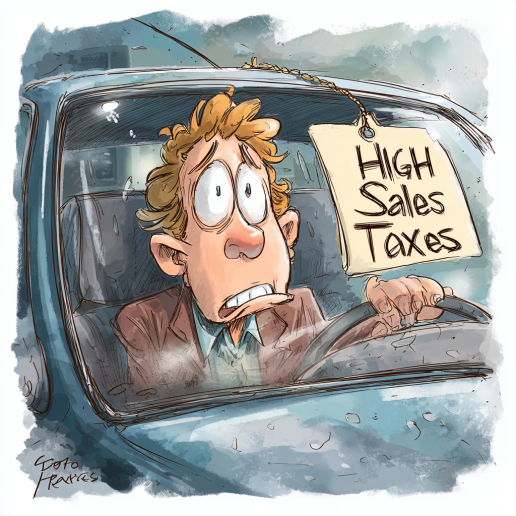
U.S. Congressional Candidate Peter Coe Verbica Explains How California's Punitive Tax Structure Is Driving Consumers — and Revenue — Out of the State
BAY AREA, Calif. & SANTA CRUZ, Calif. & MONTEREY, Calif. & SAN LUIS OBISPO, Calif. - s4story -- Have you ever met someone who moved away from California simply because of DMV fees? I have — and it's not hard to see why. Depending on the county, registration fees on a $60,000 vehicle can approach $940 (and that's before sales taxes, dealer fees, and mandatory add-ons).
For a family living paycheck-to-paycheck, that's not a minor nuisance. If a household owns three vehicles, their annual DMV burden alone could exceed a month's rent in many parts of the country.
And that's just one piece of the puzzle.
Californians already face the nation's highest gasoline taxes, some of the highest base prices due to reformulated fuel requirements, and a regulatory climate that raises the cost of nearly everything involved in transportation. But none of these are the real barrier that stops families, retirees, gig workers, and small business owners from buying a new car.
The real stumbling block — the one that freezes the entire purchase decision — is California's sales tax system.
I drive a Lincoln MKZ Hybrid with 130,000 miles on it. It has been a faithful companion through campaigns, commutes, and countless meetings. By any reasonable measure, I could justify buying a new vehicle. But I won't — not in California's current policy environment. And I'm not alone. Across our state, families, retirees, gig workers, and small business owners are quietly making the same decision: not to buy.
Why? Because California has created one of the most punitive cost structures for vehicle ownership in the nation. What used to be a straightforward purchase has become an intricate dance with sales taxes, registration fees, regulatory hurdles, and "use-tax" traps that hit honest consumers with a bill they never saw coming.
The "Punishment" for Buying a Car
Let's be candid: California has turned new vehicles — especially modest luxury or hybrid models — into a tax event rather than a transportation decision.
More on S For Story
When a consumer buys a car in California, they simultaneously trigger:
That's not "supporting green transportation." That's discouraging mobility.
The Absurdity of Deterring Responsible Buyers
In my case, I considered upgrading. As a candidate for U.S. Congress, I drive thousands of miles across Santa Clara, Santa Cruz, Monterey, and San Luis Obispo counties. A newer, fresher vehicle would be a rational choice.
But I chose not to buy one — and not because I lack the means.
My MKZ Hybrid is running beautifully. It should easily reach 180,000 to 200,000 miles. Even if the hybrid battery eventually needs replacement — an estimated $3,000–$4,000 expense — that is dramatically cheaper and more practical than handing the State of California an additional $8,000+ in taxes and fees simply for choosing to upgrade responsibly.
This isn't frugality. It's rational behavior in the face of irrational government incentives.
The Deadweight Loss: When Taxes Become So High They Reduce Revenue
Classical economics teaches us about deadweight loss — the idea that when taxes or costs become excessively high, individuals simply stop buying. Everyone loses:
Walk into a dealership anywhere from Los Gatos to Salinas and ask managers about foot traffic. Ask them about the slowdown. Ask them how many qualified buyers are delaying purchases purely due to the cost structure created in Sacramento.
California's policies don't just hurt wealthy buyers; they hurt the middle class, working families, car dealerships, union mechanics, and local tax bases. It's a perverse incentive structure that tells consumers:
More on S For Story
"If you're smart, you won't buy here."
And many are listening.
The Ripple Effect on Local Dealerships
Dealerships are often multigenerational family businesses. They employ:
This is not environmental policy.
This is not consumer protection.
This is a politically engineered choke point on mobility and commerce.
When Government Becomes the Barrier, Not the Bridge
A government should encourage responsible purchasing — not punish it. It should incentivize:
I would love to support a local dealership. I would love the benefits of a fresher hybrid or EV. But until Sacramento stops treating middle- and upper-middle-income buyers as walking revenue units, I will keep my MKZ Hybrid running for another 50,000–70,000 miles. And I suspect hundreds of thousands of Californians will do the same.
A Better Way Forward
California needs a policy environment where:
The State of California may have forgotten how everyday economics works. But the voters haven't.
— Peter Coe Verbica
U.S. Congressional Candidate
Santa Clara • Santa Cruz • Monterey • San Luis Obispo Counties
Interested in making a difference? Support Verbica's campaign and help him fight for you in California and DC: Support - Verbica for Congress
(Image source: Midjourney 2025 with inputs by P. Verbica.)
For more information: www.peterverbica.com
Paid for by Verbica for Congress.
For a family living paycheck-to-paycheck, that's not a minor nuisance. If a household owns three vehicles, their annual DMV burden alone could exceed a month's rent in many parts of the country.
And that's just one piece of the puzzle.
Californians already face the nation's highest gasoline taxes, some of the highest base prices due to reformulated fuel requirements, and a regulatory climate that raises the cost of nearly everything involved in transportation. But none of these are the real barrier that stops families, retirees, gig workers, and small business owners from buying a new car.
The real stumbling block — the one that freezes the entire purchase decision — is California's sales tax system.
I drive a Lincoln MKZ Hybrid with 130,000 miles on it. It has been a faithful companion through campaigns, commutes, and countless meetings. By any reasonable measure, I could justify buying a new vehicle. But I won't — not in California's current policy environment. And I'm not alone. Across our state, families, retirees, gig workers, and small business owners are quietly making the same decision: not to buy.
Why? Because California has created one of the most punitive cost structures for vehicle ownership in the nation. What used to be a straightforward purchase has become an intricate dance with sales taxes, registration fees, regulatory hurdles, and "use-tax" traps that hit honest consumers with a bill they never saw coming.
The "Punishment" for Buying a Car
Let's be candid: California has turned new vehicles — especially modest luxury or hybrid models — into a tax event rather than a transportation decision.
More on S For Story
- PebblePad Acquires myday to Deliver Unified Digital Campus Experiences for Student Success
- Adam Clermont Releases New Book – Profit Before People: When Corporations Knew It Was Dangerous and Sold It Anyway
- A Kiss for Damocles by J. Kenton Pierce Nominated for Prometheus Award
- Indie Sci-Fi Franchise Digi 995 Expands Storylines Through Fan-Driven Inspiration
- Dirty Heads, 311, Tropidelic, and The Movement to Headline Everwild Music Festival in 2026 with its largest lineup to date!
When a consumer buys a car in California, they simultaneously trigger:
- Some of the highest sales tax rates statewide
- Steep registration and licensing fees
- Regulatory costs unique to California
- Insurance premiums inflated by the overall cost environment
That's not "supporting green transportation." That's discouraging mobility.
The Absurdity of Deterring Responsible Buyers
In my case, I considered upgrading. As a candidate for U.S. Congress, I drive thousands of miles across Santa Clara, Santa Cruz, Monterey, and San Luis Obispo counties. A newer, fresher vehicle would be a rational choice.
But I chose not to buy one — and not because I lack the means.
My MKZ Hybrid is running beautifully. It should easily reach 180,000 to 200,000 miles. Even if the hybrid battery eventually needs replacement — an estimated $3,000–$4,000 expense — that is dramatically cheaper and more practical than handing the State of California an additional $8,000+ in taxes and fees simply for choosing to upgrade responsibly.
This isn't frugality. It's rational behavior in the face of irrational government incentives.
The Deadweight Loss: When Taxes Become So High They Reduce Revenue
Classical economics teaches us about deadweight loss — the idea that when taxes or costs become excessively high, individuals simply stop buying. Everyone loses:
- The consumer, who is priced out.
- The business, which loses the sale.
- The government, which ironically collects less revenue than if it kept taxes reasonable.
Walk into a dealership anywhere from Los Gatos to Salinas and ask managers about foot traffic. Ask them about the slowdown. Ask them how many qualified buyers are delaying purchases purely due to the cost structure created in Sacramento.
California's policies don't just hurt wealthy buyers; they hurt the middle class, working families, car dealerships, union mechanics, and local tax bases. It's a perverse incentive structure that tells consumers:
More on S For Story
- History Matters: Book Recommendations for January
- The Stork Foundation Announces 2025 Year-End Impact and Grant Awards Amid Rising National Demand
- New Book and Guided Journal Encourage Healing Through Honest Communication
- Stout Industrial Technology Appoints Paul Bonnett as Chief Executive Officer
- Revenue Optics Appoints Ljupco Icevski as Executive Advisor in Strategic Move to Accelerate Commercial Development
"If you're smart, you won't buy here."
And many are listening.
The Ripple Effect on Local Dealerships
Dealerships are often multigenerational family businesses. They employ:
- Salespeople
- Service technicians
- Detailers
- Administrative staff
- Finance workers
This is not environmental policy.
This is not consumer protection.
This is a politically engineered choke point on mobility and commerce.
When Government Becomes the Barrier, Not the Bridge
A government should encourage responsible purchasing — not punish it. It should incentivize:
- Cleaner vehicles
- Safe vehicles
- Efficient vehicles
- Local commerce
I would love to support a local dealership. I would love the benefits of a fresher hybrid or EV. But until Sacramento stops treating middle- and upper-middle-income buyers as walking revenue units, I will keep my MKZ Hybrid running for another 50,000–70,000 miles. And I suspect hundreds of thousands of Californians will do the same.
A Better Way Forward
California needs a policy environment where:
- Moderate, reasonable taxes encourage purchases rather than suppress them
- Hybrid and EV buyers are not penalized with contradictory fee structures
- Consumers can upgrade without fearing hidden penalties
- Dealerships can thrive again
- Families aren't pushed into keeping aging vehicles simply to avoid government overreach
The State of California may have forgotten how everyday economics works. But the voters haven't.
— Peter Coe Verbica
U.S. Congressional Candidate
Santa Clara • Santa Cruz • Monterey • San Luis Obispo Counties
Interested in making a difference? Support Verbica's campaign and help him fight for you in California and DC: Support - Verbica for Congress
(Image source: Midjourney 2025 with inputs by P. Verbica.)
For more information: www.peterverbica.com
Paid for by Verbica for Congress.
Source: Verbica for Congress
Filed Under: Business
0 Comments
Latest on S For Story
- WGN Chicago Features Shantel Love's Promote Your D@mn Self™ in Elevate Box Spotlight Segment
- American Laser Study Club Announces 2026 Kumar Patel Prize in Laser Surgery Recipients: Ann Bynum, DDS, and Boaz Man, DVM
- Lineus Medical Completes UK Registration for SafeBreak® Vascular
- Canyons & Chefs Announces Revamped Homepage
- $140 to $145 Million in 2026 Projected and Profiled in New BD Deep Research Report on its Position in $57 Billion US Marine Industry; N Y S E: OTH
- Really Cool Music Releases Its Fourth Single - "So Many Lost Years"
- MGN Logistics Acquires Fast Service LLC, Fueling MyMGN Marketplace Expansion and Supercharging Expedited Coverage Nationwide
- The Wait is Over: Salida Wine Festival Announces Triumphant 2026 Return After Seven-Year Hiatus
- Graduates With $40K in Student Debt Are Buying Businesses Instead of Taking Entry-Level Jobs
- Dr. Dawson Church's Spiritual Intelligence Wins Gold in Two Categories
- Anne Seidman: Within the Lines
- Kill the Ego. Elevate Your Game
- How Democrats Made Healthcare More Expensive in 2026
- Inkdnylon Launches Bilingual Ask Inkdnylon Platform
- Domenic Migliore Releases New Short Story Collection, Frame Story
- JS Gallery Brings Global Voices to LA Art Show 2026 with "OFF SCRIPT" Exhibition
- ANTOANETTA Partners With Zestacor Digital Marketing to Expand Online Presence for Handcrafted Luxury Jewelry
- Workforce AI Playbook Aligns with NIST AI Risk Framework, Advancing Responsible AI
- How Independent Publishers Are Rewriting the Future of Diverse Storytelling