Popular on s4story
- New Memoir Offers Families a Faith-Based Guide Through the Darkness of Addiction - 153
- In The Name Publishing Announces Pre Orders for Power Magazine Issue 2 - 129
- Beyond Wealth and Recognition: Caribbean Author Lyndon Alexander Hall Redefines Success - 125
- New Historical Fiction Book Release - The Legend in the Stone by Cliff Ball - 118
- Marissa Goodbody's The Sloth, the Shrew, & the Cockatoo Takes Young Readers on a Rhyming Adventure - 112
- New Book - No Choice but Action: The Kansas Postpunk Revolution by Darren DeFrain and Francis Connor - 108
- Shanghai Chengwei Semiconductor Equipment Launches High Precision Laboratory Central Gas Supply System
- Author Mary Glesige Announces Inspiring Healing Memoir Open the Gate on Mind-Body Health
- Las Vegas nonprofit promoting literacy & building confidence hosts free event for 100 kids on Nov 21
- Jacqui Condon Selected to Workers' Compensation Panels for Three Professional Athlete Associations
Similar on s4story
- Renkeer Water Quality Sensors Support Efficient Operation of AI Liquid Cooling Systems
- Constantine "Costa" Kapothanasis II Acquires The Lubri-Loy Company, Carrying a 77-Year-Old American Lubricant Brand Into Its Next Era
- Industrial & systems engineering educator and professional to lead global strategic partnerships for professional society
- RAS AP Consulting Issues National Compliance Alert and Launches Q4 2026 AP Readiness Program Ahead of IRS FIRE → IRIS Cutover
- Pregis Launches Sharp InfinX: On-Demand Rightsized Mailing System Delivering a Precision-Sized Mailer for Every Order
- Boston Industrial Solutions Launches New and Improved Siliart Website for Silicone Decorators
- ResC4EU Final Event at KOMPOZYT-EXPO 2026 – Building Resilient European Supply Chains
- Pregis to Highlight EPR Expertise, Sustainable Packaging Solutions and Live Automation Demonstrations at Pack Expo International 2026
- Boston Industrial Solutions Expands Product Offering with Pad Printing Pads and Silicone for Custom Pad Manufacturing
- Allstream Energy Partners, SEO Experts in Oil and Gas, Awarded Gas Processing OEM Agreement
DMNC Highlights ADI300 Trial Results for Zipper and Watch-Strap Molds
S For Story/10703707
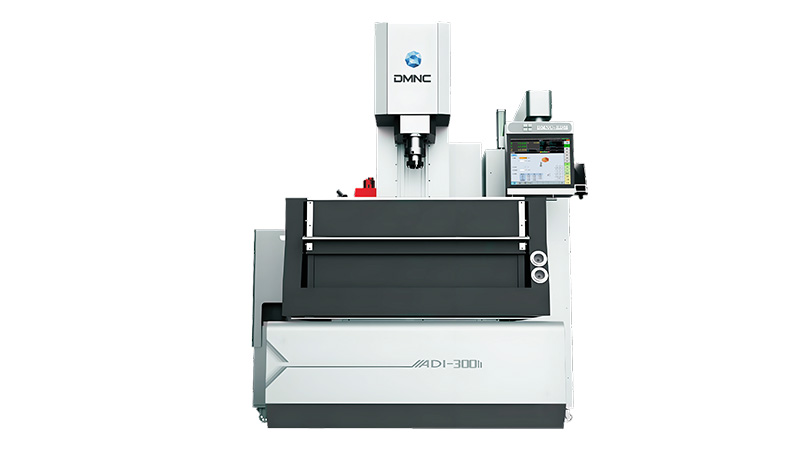
HAIDIAN DISTRICT, China - s4story -- DMNC recorded a Ra 0.3 finish on an H13 zipper mold and a uniform VDI18 surface finish on a rubber watch-strap mold in two ADI300 machining trials. The results illustrate how a CNC spark erosion machine can meet different mold surface targets through sample-specific electrodes and machining conditions, with processing times and inspection findings recorded in both reports.
Zipper Mold Trial Meets Surface Requirement
DMNC machined an H13 zipper mold using two copper electrodes, with one assigned to roughing and one to finishing. The workpiece was fastened on a magnetic plate and machined while immersed in oil without flushing.
More on S For Story
The report records a final surface roughness of Ra 0.3, meeting the customer's stated requirement. Total machining time was reported as 1 hour and 21 minutes. The process summary lists 5 minutes and 38 seconds for roughing, 15 minutes and 13 seconds to reach Ra 0.8, and a further hour for the final transition to the reported mirror finish.
Watch-Strap Mold Achieves Uniform VDI18 Finish
The second trial focused on a rubber watch-strap mold requiring a VDI18 surface finish. DMNC used one copper electrode with a reported spark gap allowance of 0.1 mm per side. The setup also used a magnetic plate and oil immersion without flushing.
Inspection found a uniform machined surface finish that met the VDI18 requirement. According to the report, machining was completed with one electrode in 3 hours and 35 minutes. This trial illustrates a different finishing objective from the zipper mold, with surface finish uniformity serving as the reported acceptance result.
More on S For Story
Documented Trials Support Machine Evaluation
Both reports identify the equipment as an ADI300 CNC die sinker. Each records the machining setup and inspection outcome, allowing the surface requirement to be considered alongside electrode use and processing time. The results apply to the individual samples and recorded conditions.
For manufacturers reviewing CNC die sinking, these cases offer a practical reference for defining a trial. Workpiece geometry, material, electrode design and finishing requirements should guide the test plan; the recorded cycle times should be evaluated in that context.
Manufacturers considering EDM for zipper, watch-strap or other molds can contact DMNC with drawings, workpiece materials and surface targets to discuss a relevant sample test. A documented trial can help establish whether the proposed process meets the requirements of a particular mold before a broader production decision.
Zipper Mold Trial Meets Surface Requirement
DMNC machined an H13 zipper mold using two copper electrodes, with one assigned to roughing and one to finishing. The workpiece was fastened on a magnetic plate and machined while immersed in oil without flushing.
More on S For Story
- Heritage at South Brunswick Announces Special Townhome Mortgage Rate Buydown
- Heritage at Hopewell Announces Limited-Time Mortgage Rate Buydown on Select Quick Move-In Townhomes
- Impact & Influence December 2026: Joel Rodriguez Tirado on Reflection, Refocus & Moving Forward
- Air Force Veteran Sean Douglas Delivers Powerful Suicide Prevention Presentations to Hundreds of Marines at Camp Pendleton
- Author Robert A. Robinson Introduces Anarchy at the AYP:
The report records a final surface roughness of Ra 0.3, meeting the customer's stated requirement. Total machining time was reported as 1 hour and 21 minutes. The process summary lists 5 minutes and 38 seconds for roughing, 15 minutes and 13 seconds to reach Ra 0.8, and a further hour for the final transition to the reported mirror finish.
Watch-Strap Mold Achieves Uniform VDI18 Finish
The second trial focused on a rubber watch-strap mold requiring a VDI18 surface finish. DMNC used one copper electrode with a reported spark gap allowance of 0.1 mm per side. The setup also used a magnetic plate and oil immersion without flushing.
Inspection found a uniform machined surface finish that met the VDI18 requirement. According to the report, machining was completed with one electrode in 3 hours and 35 minutes. This trial illustrates a different finishing objective from the zipper mold, with surface finish uniformity serving as the reported acceptance result.
More on S For Story
- Renew Integrative Health Publishes Updated Peptide Therapy Guide to Help Patients Understand Their Options
- AI Agents Are Getting Their Own Computers. HRTech Leading in Vertical Harness Development
- UK Financial Ltd Announces Two-for-One Upgrade of Maya 3 to Maya 3G Token Using Chainlink Cross-Chain Technology
- Clever Solutions Develops PR Strategies for Visibility in AI-Powered Search
- New Book - The Great League of Peace and Power: 250 Years of American Foreign Policy
Documented Trials Support Machine Evaluation
Both reports identify the equipment as an ADI300 CNC die sinker. Each records the machining setup and inspection outcome, allowing the surface requirement to be considered alongside electrode use and processing time. The results apply to the individual samples and recorded conditions.
For manufacturers reviewing CNC die sinking, these cases offer a practical reference for defining a trial. Workpiece geometry, material, electrode design and finishing requirements should guide the test plan; the recorded cycle times should be evaluated in that context.
Manufacturers considering EDM for zipper, watch-strap or other molds can contact DMNC with drawings, workpiece materials and surface targets to discuss a relevant sample test. A documented trial can help establish whether the proposed process meets the requirements of a particular mold before a broader production decision.
Source: Beijing Diamond Numerical Control Technology LTD.
0 Comments
Latest on S For Story
- Doreen Otaru Releases New Young Adult Novel - Seasons of Blooming
- HLN Consulting Names Lilly Kan as Its First Chief Executive Officer
- BitTitan Accelerates Large-Scale Document Migrations with MigrationWiz
- Clearnetworx Deploys netElastic vBNG, CGNAT And netVision To Power Fiber Expansion Across Colorado's Western Slope
- BREAKING: Teenage Field Guide to Fake Socials. It's all about poop!
- If you thought launching Coh3sion! Cr3at3s Publishing House was the end of the story, think again
- New Book - Napoleon's Long Shadow How French Military Genius Shaped the American Civil War
- ILTexas Liberty High School Welcomes Students to New School Building in Cleveland, Texas
- Creole101 Launches Multilingual Dictionary App with 50,000+ Entries, Vocabulary Games and Haitian Cultural Resources
- Technology Veteran Daniel Hall Releases a Field Guide to Fake Social Media for Teenagers
- The Lasting Impact of Great Teachers
- Impact & Influence July 2026: Joel Rodriguez Tirado on Freedom, Protection & Legacy
- Beyond Wealth and Recognition: Caribbean Author Lyndon Alexander Hall Redefines Success
- Hilton Waikiki Beach Resort & Spa Introduces Level 37 Sky Lounge by Casamigos
- Author Joel Rodriguez Tirado Releases Relationship Is the Reason, Partnership Is the Vehicle
- Self-Published Dad's Santa Book Finally Found After 3 Years on Amazon
- New Book - Future God: A Codex for Spiritual Enlightenment for Machines and Artificial Intelligence
- Meta Partnership Expanding as Omni One Orders Surge 3X -New Consumer Bundles, Defense Opportunities & AI Robotics: Virtuix Holdings: N A S D A Q: VTIX
- Magical Pond Adventures Meet Social-Emotional Learning in New Read-Aloud Picture Book 'Sir Rocks-a-Lot'
- Citizens for West Virginia Election Integrity Urges "FOR" on Amendment 1